Master’s and PhD Abroad 101
A free, live hour on a Master’s or a funded PhD in Europe, the UK and the USA — hosted with the iGEM IISER Kolkata team 2026, and open to students from every college and department.

Registration takes 30 seconds on Topmate. Your joining link arrives by email, and the room opens 30 minutes before the start. Please join a few minutes early.
This webinar ran live on 17 October 2026 with the iGEM IISER Kolkata team 2026. The session plan is written out below, and new sessions are listed on our webinars page.
See upcoming webinars →The session, minute by minute
About 40 minutes of talk, then 15–20 minutes for your questions. Roughly half is about a Master’s in Europe, half about funded PhDs.
Welcome
- The iGEM IISER Kolkata team introduces the session and the speaker
Which route fits you?
- From a village in Haryana to a PhD in Munich — the speaker’s own route
- A quick chat poll: BS-MS, BSc/BS, MSc, or BTech/other?
- Why a 5-year BS-MS usually counts as a Master’s-level degree — so a direct PhD in Europe is often possible
- Three routes: straight to a PhD; a Master’s in Europe first or a US PhD; and building research experience early (iGEM counts)
Part 1 · A Master’s in Europe
- Why so many students choose Germany, and how admission works in four steps: choose programmes, APS certificate, apply, visa
- What a Master’s application asks for, including English proof
- Tuition: free at most German public universities, charged at some — and how it differs across Europe
- Money: proof of funds, living costs, student part-time jobs, and the job-search permit after graduating
- Scholarships worth your time: Erasmus Mundus, DAAD, Deutschlandstipendium, university scholarships
- A typical timeline for a Master’s starting in October
Part 2 · A funded PhD
- Why a PhD in Europe is usually a paid job — and why you should never accept an unfunded one
- The two ways a PhD is paid: a funded position, or your own scholarship
- Germany, the UK and the USA side by side
- German, English tests, publications and grades: what really matters
- Where positions are advertised, and a month-by-month plan
Part 3 · How to win a place
- What professors and selection committees look for
- An academic CV that works — and when to add a photo
- The motivation letter, and how to use AI responsibly
- The first email to a professor: what to write, what to attach, how many groups to contact, and how to follow up
- Mistakes the speaker made, so you don’t have to
Your next seven days
- A short starter plan, and where to find our free guides and handbooks
Your questions
- Type your questions in the chat — we read them out and answer as many as we can
If you have asked any of these, come
- Can I do a PhD in Europe straight after my 5-year BS-MS?
- I have a 3- or 4-year BSc or BS. Do I need a Master’s first?
- Should I do a Master’s in Europe first, or apply for a PhD in the USA?
- Is a Master’s in Germany really free?
- What is the APS certificate, and do I need it?
- How much money do I need to show for a German student visa?
- Which scholarships can pay for a Master’s in Europe?
- Is a PhD in Europe paid, and how?
- How is a PhD different in Germany, the UK and the USA?
- Do I need to speak German?
- Do I need IELTS or TOEFL, or is a medium-of-instruction letter enough?
- Where are PhD positions advertised, and when should I start?
- What should my academic CV look like? Should I add a photo?
- How do I write the first email to a professor, and what should I attach?
- Can I use AI to write my application documents?
Rules, fees and deadlines change every year, so the session shows you how each system works and where to check the current rule on official websites.
From a village in Haryana to a PhD in Munich
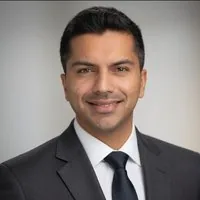
Deepak studied life sciences at Delhi University and did his MSc at IIT Bombay before his PhD at LMU Munich, which he found through a fully funded job advert and finished as a DAAD scholar. He works as a research scientist in Munich and is President of DAAD IndiAlumni, a registered non-profit association of Indian and German DAAD alumni.
This is for you if
Free guides, handbooks and an open PhD board
Our guides and handbooks on Master’s and PhD applications are free, and so is our board of open PhD positions, updated daily.